
It’s December. Mariah Carey is haunting the radio stations; everyone and their mother is baking cookies, cakes, and pies; and people are criss-crossing the country (and the world) to be with the ones they love.
It’s a good time to talk about holiday traditions. But let’s start with a brief foray into Icelandic publishing houses.
What Is Jólabókaflóð?
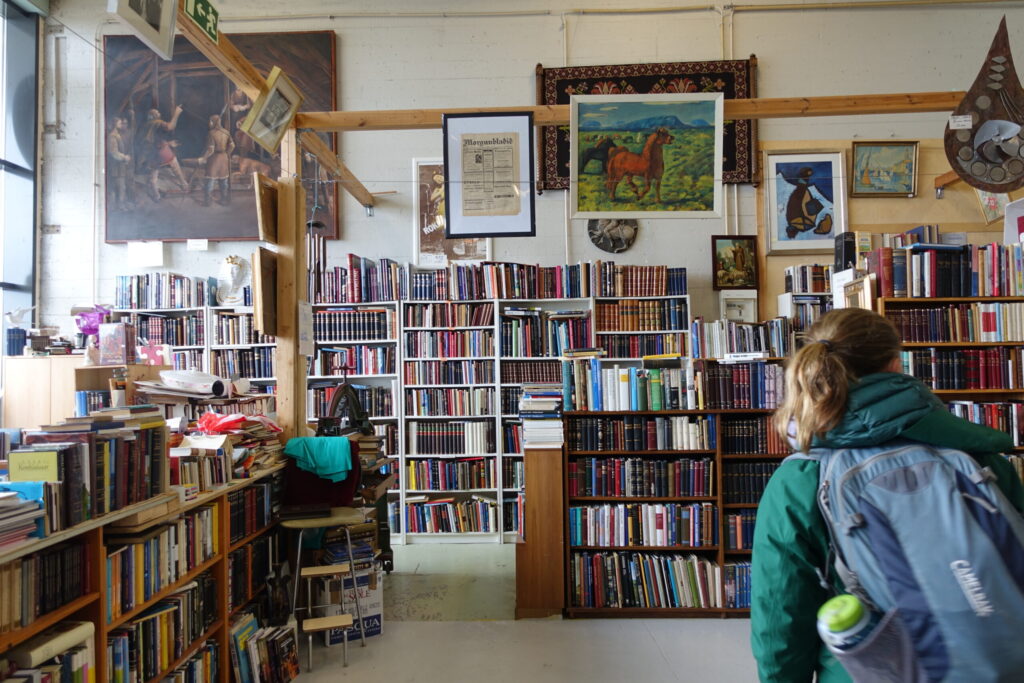
Jólabókaflóð, or the “Christmas Flood of Books,” is the Icelandic publishing phenomenon in which publishers often reserve books to publish in the two months leading up to Christmas. This “flood” of exciting book releases meets the needs of Icelandic Christmas shoppers, as books are a traditional Christmas gift. The surge of new releases paired with the book-buying habits of Icelanders certainly pays off for Iceland’s publishing houses; it’s reported that about 80% of the Icelandic publishing industry’s revenue is received in the two months leading up to Christmas.2
For many Icelandic households, Christmas Eve includes a big family dinner followed by the exchange of gifts — some of which are, of course, books — which does mean that Christmas Eve is bound to find some Icelanders curled up with a good read.
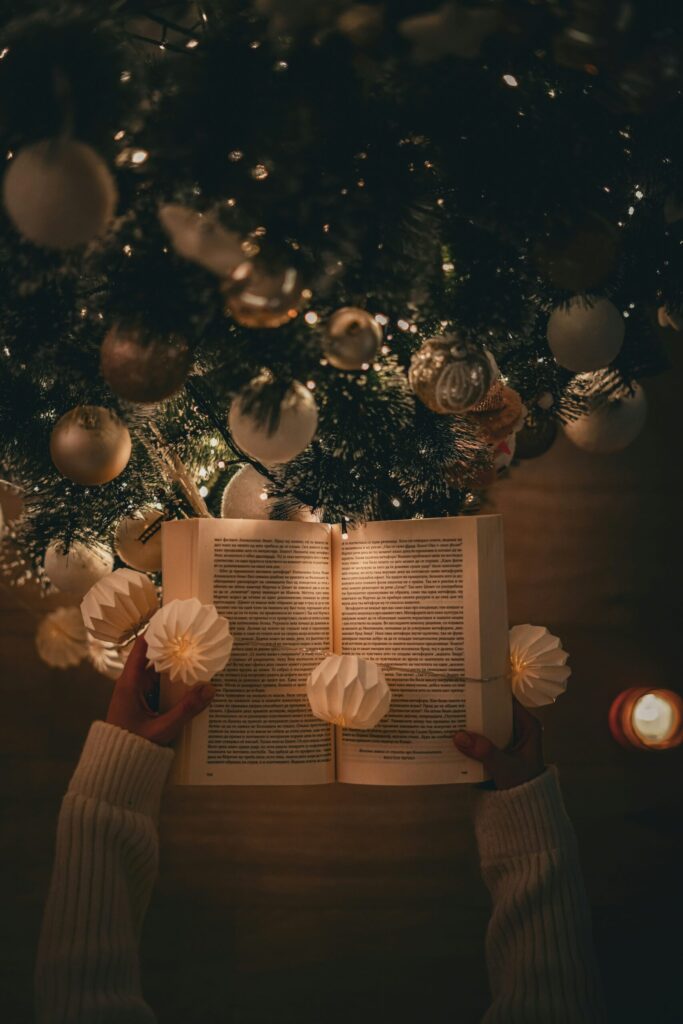
Now, if you’ve heard of Jólabókaflóð before (particularly on social media), that last image will probably sound more familiar to you. That’s because this romantic idea became conflated with the publishing event of Jólabókaflóð, such that Jólabókaflóð is often misunderstood as referring to a Christmas Eve tradition involving the exchange of books and chocolate, often followed by a cozy evening reading together.
It’s easy to see why that image caught the eye of so many and made its rounds on social media. What book-lover wouldn’t relish the idea of a book-and-chocolate gift exchange followed by a Christmas Eve reading session? It sounds heavenly to me! The tradition understandably stirred the hearts of many non-Icelanders, some of whom have gone on to institute their own “Jólabókaflóð” tradition of books and chocolate on Christmas Eve.
All of which leads us to the whimsical fact that there are people around the world celebrating a holiday that doesn’t really exist.
…Or does it?
In Defense of New Traditions
One such “Jólabókaflóð” celebrant asked about the authenticity of the book-and-chocolate Christmas Eve gift exchange in a Reddit thread, and, upon finding out the idea had gotten a bit twisted along the way, expressed their love of the tradition while admitting, “Maybe it’s weird that the romantic version is being co-opted elsewhere.”1
To that, Icelandic Reddit user EgNotaEkkiReddit gave this eloquent and insightful response:
Not at all. These faux-cultural exchanges are culture too! Just think of all the other misappropriated cultural items you enjoy in your daily life! Imagine f.i [sic] Chinese food: Much of what the west considers Chinese food was invented in the US. A lot of Japanese people eat KFC on Christmas because that was marketed as what “they do in the west”. A whole lot of holidays taken from other nations look nothing like what they did in their home culture at the time of them being co-opted.
Culture is a dialogue. The fact a tradition is built on a misunderstanding doesn’t invalidate the tradition, as you’ve demonstrated in how much it means to you and your friends. In copying a culture that doesn’t exist those that celebrate “Jólabókaflóð” have created culture that’s every bit as valid as if it was a real Icelandic thing as described.
– EgNotaEkkiReddit, via Reddit
Yes, culture — like language — borrows from everywhere. As James D. Nicoll humorously (and rightly) said of the English language: “We don’t just borrow words; on occasion, English has pursued other languages down alleyways to beat them unconscious and rifle their pockets for new vocabulary.” So too does culture and tradition possess sticky fingers.
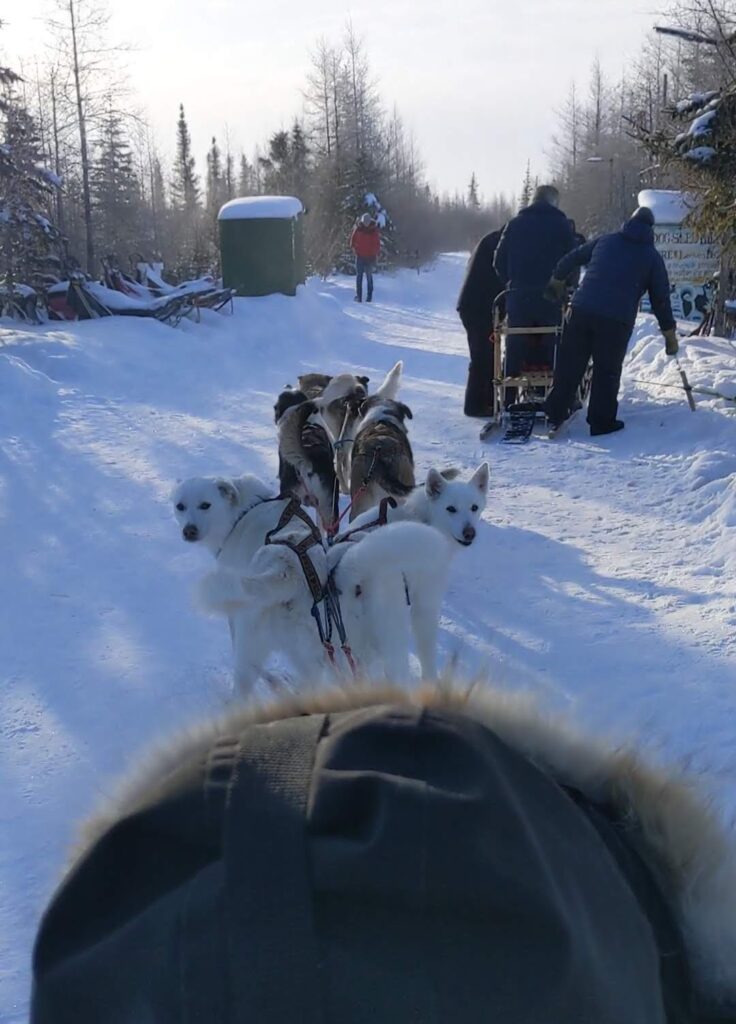
I myself am half Korean; my mother, her parents, and her siblings all came to the US when she was about five years old, and her side of the family is a delightful mix of Korean and American ideas. I know for a fact that many of our family recipes, habits, and celebrations are not strictly “proper” or “traditional” by Korean standards — but they have nonetheless become beloved traditions to us.
On a wider scale, the typical Christmas celebrations in America today show us the same cocktail of stolen symbols, borrowed customs, and tangled ideas. While celebrating the Christian story of the Nativity, Christmas as we know it includes elements borrowed from outside the Bible: the Christmas tree, the Yule log, and of course Santa Claus himself.
Though some will undoubtedly bemoan these additions to the Christmas holiday, it is my personal belief that these twists and turns are exactly what make traditions such as Christmas beautiful — and enduring. Maybe holiday traditions should not be so rigidly defined. Maybe, instead of prescribing what traditions should or shouldn’t be, we should focus on what they are.
Maybe your holiday tradition is attending Midnight Mass.
Maybe it’s watching wrapping paper go flying while the kids tear open their gifts on Christmas morning.
Maybe it’s Hanukkah celebrations with your family.
Or, maybe it’s a book swap and a bar of chocolate on Christmas Eve.
Whatever you’re doing this holiday season, I hope you revel in your own kind of celebration. With all the influences that have molded how the holiday looks for you, with all the changes that happen (and will continue to happen) over time, in all the ways that things are inherently different every year… may you find peace and joy in whatever tradition is yours.
Remember, circumstances are always changing, and we are always changing with them. Let’s find beauty in nuance this season, and confidence in the constancy of change.
Let’s embrace innovation as the universal human tradition.
Thank you for exploring with us! Until next time, may the pages and paths ahead of you be great.
Sources
- EgNotaEkkiReddit. (2021). Not at all. These faux-cultural exchanges are culture too! Just think of all the other misappropriated cultural items you enjoy [Comment on “Help settle a debate: is jolabokaflod truly the norm around Christmas? Or is it a minor, niche thing that blogs and pinterest have blown out of proportion?”]. https://www.reddit.com/r/Iceland/comments/rkz5jr/help_settle_a_debate_is_jolabokaflod_truly_the/
- Sigmundsdóttir, A. (2025, December 4). The Icelanders and their Big Love of books. Guide to Iceland. https://guidetoiceland.is/connect-with-locals/aldasigmunds/the-icelanders-and-their-big-love-of-books